El Nuevo Día
- 3.8
- Rating
- 500.00K
- Installs
- Free
- Price

 Analysis by App-foxy
I opened El Nuevo Día expecting a straightforward way to keep up with Puerto Rico, but the useful question is not whether a news app can fill a few spare minutes. Most of them can. The better question is whether it becomes part of your routine after the first burst of curiosity fades. In my experience, this app has a clear reason to stay installed: it puts a Puerto Rico-centered news source in a form that is easier to check repeatedly than a general web search. That focus gives it more daily relevance for local readers than a broad international news app, although it also means it is not the only news tool I would keep.
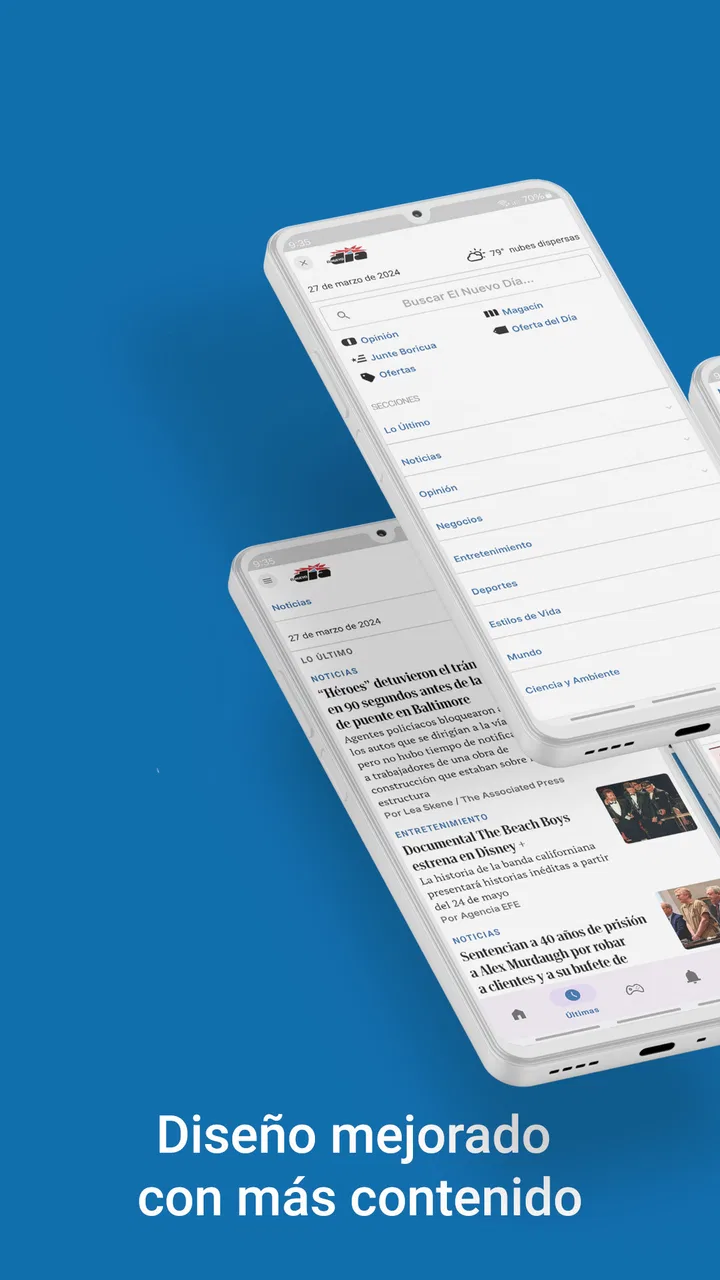
El Nuevo Día is a free News & Magazines app from GFR Media for Android. It is rated for Everyone 10+, runs on Android 6.0 or later, and the current version is 6.0.2. The app has passed half a million installs, with an average rating of 3.8 from roughly eleven thousand ratings. Those figures suggest a familiar, established product rather than a brand-new experiment, but they also tell me to keep expectations realistic: this is a practical newspaper companion, not a flawless replacement for every other source of information.
What keeps it useful after the first week
The first-week appeal comes from reducing the effort required to find Puerto Rico news. Instead of opening a browser, remembering a site address, and sorting through unrelated search results, I can go directly to a publication built around the island’s news cycle. That matters most in the morning, during a commute, or whenever I have only a few minutes to understand what is happening locally.
You May Also Like

 Blood Strike: 2.5 Anniversary
Blood Strike’s Loadouts Turn Every Drop Into a Tactical Gamble
A close look at Blood Strike’s custom loadouts: how fast access to signature weapons reshapes its battle royale rhythm, rewards preparation, and narrows the gap between fights.

 Pandora - Music & Podcasts
Pandora’s Music Is Easy to Start, but Harder to Recover
Pandora’s strength is its low-effort path from a seed to a station. Its weak spot is how much confidence it asks you to place in connection, setup, and quiet recovery.

 8 Ball Pool
 Is Built on Rivalries, Rematches, and Routine
A close look at the rivalries, rematches, shared routines, and unanswered safety questions that turn a quick pool match into a persistent mobile community.

 Samsung Music
’s Quiet Strength Is Playing What You Already Own
Its reach comes less from spectacle than from dependable access to a personal library. That simplicity is both the app’s strongest retention engine and its ceiling.

 AccuWeather: Weather Radar
AccuWeather Review: A Quick, Clear Forecast for Everyday Decisions
For everyday plans, the best forecast is the one you can understand quickly. AccuWeather makes rain timing, radar, and local conditions easy to act on, with a few trade-offs.

 Hill Climb Racing
Why Hill Climb Racing Still Turns Crashes Into One More Run
A tiny car, a bumpy hill and one more upgrade: Hill Climb Racing keeps resurfacing because its simple chaos makes every near-miss feel personal.
More From Our News Desk



I found the app most useful when I treated it as a starting point rather than an endless feed. I would open it, scan the main headlines, choose the stories that affected my interests, and then stop. That simple habit is more sustainable than trying to read everything. The app’s value comes from making a focused check feel easy, especially for people who want local context before moving on to national or international coverage.
A realistic everyday scenario is checking the app before work. I might want to know whether a public issue is developing, whether a local event is changing plans, or which story deserves a deeper read later. A general news aggregator can show major headlines, but it may bury Puerto Rico coverage among stories selected for a much wider audience. Here, the local emphasis is the reason to choose this app.
That focus is also useful for people living away from Puerto Rico. Someone who has moved elsewhere, has relatives on the island, or simply wants a dependable local perspective can use the app as a regular connection point. I would not rely on it alone for every subject, but it can give a Puerto Rico-focused reader a more relevant first screen than an international publication’s application.
The app is also approachable for casual readers. You do not need to build a complicated dashboard or learn a specialized workflow to get value from it. Open it when you want news, read what matters, and leave. That low commitment is important because a news app that demands constant organization quickly becomes another chore.
Where it beats the usual alternatives
Compared with a browser bookmark, El Nuevo Día feels more deliberate. A bookmark may take you to the same publication, but the app is easier to place into a repeatable phone habit. Compared with a social media feed, it offers a better chance of encountering news in a more focused environment instead of mixing reporting with reactions, promotions, and personal posts. Compared with a global news app, its strongest advantage is relevance to Puerto Rico.
Those comparisons have limits. A browser remains better when I want to compare several publications quickly, search an older article, or avoid adding another app. Social platforms may surface urgent conversations faster, even though they require more judgment. A general news reader is better for someone whose main interest is world news, business across several countries, or a single combined feed. El Nuevo Día earns its place when local coverage is the priority, not simply because it is an app.
One useful tip is to decide what role it will play before opening it every day. If I use it for a quick local briefing, the experience stays manageable. If I expect it to replace a browser, a national news source, and social updates at the same time, disappointment becomes more likely. That distinction is easy to miss during the first few days, when any focused news source feels fresh.
The small decisions that improve the routine
I would also separate reading time from checking time. A short headline scan works well during a busy morning, while longer stories are better saved for a quieter moment. This prevents the app from becoming a source of constant interruptions and makes it easier to judge whether it is genuinely helping rather than merely filling empty minutes.
Another practical approach is to use the app for discovery and another source for verification when a story affects an important decision. News readers should still compare coverage, especially on complicated or fast-moving subjects. The app’s local perspective is valuable, but local focus does not remove the need to read carefully, distinguish reporting from commentary, or look for updates.
For readers concerned about cost, the download is free, but in-app purchases range from $2.99 to $95.99 per item. I would pay attention to what the app presents during use and decide whether any paid option matches my reading habits before committing. A person who only wants occasional headlines may find the free access sufficient, while a frequent reader may consider a paid offering differently. The important point is to treat the purchase as a choice, not as an automatic part of installing the app.
Whether it survives the novelty test
After the first week, the main challenge is repetition. News apps do not usually fail because they are difficult to understand; they fade because users stop having a clear reason to open them. El Nuevo Día has a stronger chance of surviving that test for a reader who regularly follows Puerto Rico. Local news changes often enough to support a recurring habit, and the publication’s identity gives the app a purpose that is clearer than a generic headline feed.
Still, I would not describe the long-term value as automatic. If my interests are mostly entertainment from abroad, international politics, technology, or financial markets outside Puerto Rico, I may open the app less often. In that case, a broader reader could provide more useful coverage in one place. The app is at its best when its local emphasis matches the reader’s actual information needs, not when it is installed simply because it is available.
The month-to-month benefit is also tied to how well I control my attention. A news application can become tiring if I check it repeatedly without a purpose. I prefer a few intentional visits over constant refreshing. That habit gives each visit a job: catching up, following a developing topic, or reading a specific report. Without that structure, even relevant coverage can start to feel like noise.
One non-obvious trade-off is that a focused local app can improve relevance while narrowing perspective. I may spend less time sorting through irrelevant headlines, but I also need another source when I want a wider national or international frame. I see that as a normal division of labor rather than a defect. The mistake would be expecting one publication app to provide every angle on every subject.
Another useful workflow is to read the headline, open the full story only when the subject matters, and then revisit the topic later if it is developing. That approach helps me avoid forming an opinion from a headline alone while keeping the daily routine short. It also makes the app more valuable for busy readers, because the goal becomes informed selection rather than maximum screen time.
Maintenance is light, but attention is the real cost
From a maintenance perspective, the app is relatively easy to keep around. Its minimum operating requirement of Android 6.0 makes it accessible on older Android devices, and the current version gives users a clear update target. I would still keep the application updated through the usual store process, because news apps depend on reliable delivery and compatibility more than a static utility does.
The larger maintenance burden is personal. I need to decide whether notifications, if used, are helping or interrupting me, and I need to review my reading habit when the app starts taking more time than it returns. I would begin conservatively, checking the app manually rather than allowing every possible alert to shape my day. If a notification repeatedly leads to shallow reading, turning that behavior down is more useful than blaming the app for being available.
Storage and device age may also influence the experience, even though the application’s basic compatibility is broad. On an older phone, I would judge it by how comfortably it opens and displays stories during normal use rather than assuming that a compatible operating system guarantees a perfect experience. If the app feels slow or awkward on a particular device, the mobile website may be the more practical choice for that person.
There is also a maintenance question around paid access. Because purchases are available, I would keep track of whether I am receiving enough recurring value from any paid option. A subscription-style commitment or premium purchase makes more sense for someone who reads the publication frequently than for someone who checks only during major events. The app can remain useful without turning every user into a paying reader, but each person should match spending to actual use.
What can create fatigue over time
The first source of fatigue is the emotional weight of continuous news. Even a well-focused local feed can make every day feel urgent if I open it too often. I handle that by deciding when I am available for news and when I am not. The app should support my routine, not dictate it.
The second is headline repetition. A developing story may appear in several forms as it changes, and readers who want something entirely new on every visit may become frustrated. I see repeated coverage as useful when I am following an important event, but unnecessary when I am only looking for a quick distraction. Choosing whether to go deeper or leave is part of using the app well.
The third is the boundary between convenience and completeness. A dedicated newspaper app is convenient because it has a recognizable editorial focus. It is less complete than a carefully assembled set of sources. Readers who need several viewpoints, specialist reporting, or extensive archives may prefer a browser and multiple publications. That does not cancel the app’s usefulness; it defines it more honestly.
Finally, the rating of 3.8 indicates that the overall experience is solid for many people but not universally satisfying. I would read that as a reason to test the app against my own routine rather than as a verdict for everyone. Someone who values Puerto Rico coverage may tolerate occasional friction that would bother a reader looking for a highly polished all-purpose news reader.
Who should install it, and who should skip it
I would recommend El Nuevo Día to Puerto Rico residents who want a direct daily news habit, people with family or ongoing interests on the island, and readers who prefer a publication-centered experience over a social feed. It is especially suitable for someone who wants to check local headlines quickly and then decide which stories deserve more time.
I would be more cautious if I mainly need global coverage, a multi-source dashboard, deep research tools, or a distraction-free reading environment with no commercial prompts. In those cases, a browser, a broader news reader, or a different publication may fit better. I would also skip it if I rarely read news at all; installing another source will not create a useful habit by itself.
Parents and younger users should also remember the Everyone 10+ content rating. That makes the app broadly accessible, but news can still include serious subjects, distressing events, or complicated public issues. I would use ordinary judgment about when and how a child encounters the content rather than treating the age label as a guarantee that every story will feel comfortable.
For me, the strongest reason to keep it installed is not novelty, design, or the simple fact that it is free. It is the recurring usefulness of a Puerto Rico-focused news routine. I can open it with a clear purpose, get a local briefing, and move on without constructing that experience from scattered links. That is a modest benefit, but modest benefits are exactly what survive in a phone’s crowded app list.
My final view is favorable with clear boundaries. El Nuevo Día deserves lasting space for readers who need Puerto Rico news regularly, provided they keep their expectations focused and use another source when broader comparison matters. Its free entry point makes trying it easy, while the available in-app purchases mean I would evaluate paid access according to actual reading frequency. Its long-term strength is habit-friendly local relevance, not being a complete replacement for the entire news ecosystem. If that is the role you need, I think it is worth keeping; if not, the app may become one more icon opened during the first week and forgotten afterward.
FAQs for El Nuevo Día
01What is El Nuevo Día?
El Nuevo Día is a digital news app focused primarily on Puerto Rico and the Caribbean, with coverage of local politics, business, sports, entertainment, culture, technology, and international events. After installing it, users can browse the latest headlines, open full articles, view multimedia content, and follow developing stories in a mobile-friendly format designed for reading on the go.
02Is El Nuevo Día free to download and use?
The El Nuevo Día app can generally be downloaded at no cost, allowing users to access the application and view available content. However, some articles, premium features, or the complete digital edition may require a subscription or account, depending on the current access policy. Before downloading, check the app listing and subscription terms for the latest pricing and limitations.
03Does El Nuevo Día require a subscription?
A subscription may be necessary to read certain premium articles or unlock broader access to the publication’s digital content. The exact number of free articles and the features included with a subscription can change over time. If you mainly want occasional headlines, the free access may be sufficient, while frequent readers should review the available plans before subscribing.
04What type of content can I find in El Nuevo Día?
The app offers a broad selection of journalism, including Puerto Rican news, government and political reporting, economic updates, sports results, entertainment, lifestyle, opinion pieces, and international coverage. Depending on the section and publication schedule, users may also find photo galleries, videos, special reports, alerts, and coverage of breaking events that are important to readers in Puerto Rico.
05Is El Nuevo Día available for both Android and iPhone?
El Nuevo Día is designed for mobile users and is commonly available through the official app stores for Android and iOS devices. Compatibility can depend on your phone model, operating system version, and the publisher’s current support requirements. For security and reliable updates, download it only from Google Play or Apple’s App Store rather than from unofficial websites or modified APK sources.
Pros
- Clear
- well-organized coverage of Puerto Rican news and current events.
- Useful sections for politics
- business
- sports
- culture
- and entertainment.
- Articles are generally quick to open and easy to read on mobile devices.
- Push notifications help readers stay updated on breaking stories.
- Digital access complements the newspaper’s established editorial reputation.
Cons
- Some premium articles may require a paid subscription to read fully.
- Frequent notifications can feel excessive unless carefully customized.
- Advertising may interrupt browsing and reduce the reading comfort.
- Coverage is primarily focused on Puerto Rico and may feel limited globally.
- Certain features may depend on a stable internet connection.

El Nuevo Día
Gallery